clean meat


No poverty
no war
barter
#FridaysForFuture


happy animals
happy people
happy earth
clean environment
- mindful people
Trade and globalisation
The World Trade Organisation (WTO) is the only global international organisation dealing with the rules of trade between nations. At its heart are the WTO agreements, negotiated and signed by the bulk of the world’s trading nations and ratified in their parliaments. The goal is to help producers of goods and services, exporters, and importers conduct their business.
While the WTO is driven by its member states, it could not function without its Secretariat to coordinate the activities. The Secretariat employs over 600 staff, and its experts — lawyers, economists, statisticians and communications experts — assist WTO members on a daily basis to ensure, among other things, that negotiations progress smoothly, and that the rules of international trade are correctly applied and enforced - Source
Live export is the commercial transport of livestock across the national border
Live export is used to send stock to multiple international countries. Australian Livestock Exporters’ Council chairman Simon Crean stated in a speech that a “demand for live animals exists for a number of reasons, including … feedlots, breeding programs and a desire to build local industry capacity”. “There is also the inadequacy of local supply chain infrastructure to handle chilled and frozen meat products, usually in line with where a country is in terms of economic development,” Mr Crean said.
“And of course, in many markets, there is a preference for live animals according to tradition or local culture.”
In the 1970s, there was a strong demand for food in the Middle East. Due to this, Australian sheep producers sent animals to different countries that were willing to pay big dollars for high quality, disease free stock. Later on, there was a demand from South-East Asia that allowed Australia’s live cattle industry to boom.
According to Meat and Live Stock Australia, the industry employee 13,000 people across rural and regional Australia, supporting thousands of farmers and families. The industry is worth $1.8 billion which allows the Australian economy to grow - Source
The live export industry causes widespread debate amongst the public. The disadvantages of live exports is mainly driven from the treatment of the stock – many consider it to be cruel.
Rough seas, temperature extremes, built up waste and crowded conditions cause illness and injury to the stock. Death can be caused by heat stress, salmonella-induced enteritis or starvation. According to Animals Australia, “the industry simply accepts these deaths as part of its business model”.
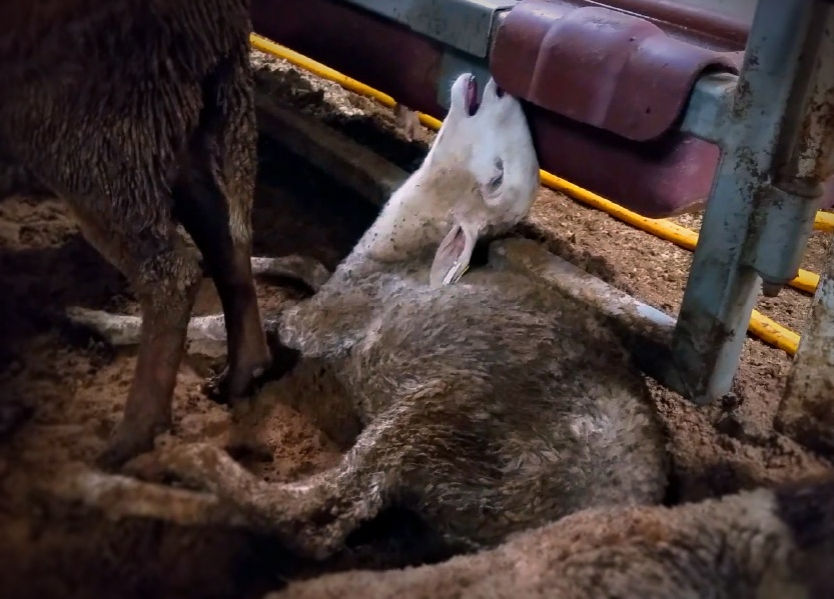
"It is difficult for the Australian government to regulate animal welfare due to the inability to enforce laws beyond our nation".
Abuse of Australian cattle exported to Gaza - The footage, filmed by local civilians and uploaded to YouTube, shows cattle tied to poles, trees and vehicles before being stabbed in the neck and eyes. One animal was kneecapped by shots from an assault rifle. Animals Australia said the footage, filmed during a ritual called the "festival of sacrifice", was some of the worst seen in a series of animal welfare outrages involving Australian cattle. WARNING: CONTAINS EXTREMELY GRAPHIC IMAGES - Source

Nightmare comes true for Romanian sheep exported to Persian Gulf
Animal protection organisations are calling for infringement proceedings against Romania, which allowed 66,000 sheep to be exported to the Persian Gulf in the middle of summer, despite the EU Commission urging authorities not to allow the vessel to leave.
In a recent letter to Animals International, Romanian authorities claim they required a 20% reduction in stocking density to mitigate heat stress. But the organization’s evidence, presented last week to the EU Commission, reveals that hundreds of sheep died by the time they reached their destinations, with an investigator describing the “piles of dead sheep” that were filmed at the unloading point in the Gulf.
They also saw surviving sheep being “beaten” as they disembarked in temperatures of over 40°C. While the initial destination was Kuwait, the vessel made 5 stops in the Gulf, increasing the risks of suffering and death from heat stress. Animals were unloaded in Saudi Arabia, Kuwait, Dubai, Qatar and Oman - Source

China - the world largest export country
China is the largest export economy in the world and the 33rd most complex economy according to the Economic Complexity Index (ECI). In 2017, China exported $2.41T and imported $1.54T, resulting in a positive trade balance of $873B. In 2017 the GDP of China was $12.2T and its GDP per capita was $16.8k.
The top exports of China are (list) Broadcasting Equipment ($231B), Computers ($146B), Office Machine Parts ($90.8B), Integrated Circuits ($80.1B) and Telephones ($62B), using the 1992 revision of the HS (Harmonized System) classification. Its top imports are Integrated Circuits ($207B), Crude Petroleum ($144B), Iron Ore ($59B), Cars ($46.8B) and Gold ($40.3B).
The top export destinations of China are (list) the United States ($476B), Hong Kong ($255B), Japan ($157B), Germany ($109B) and South Korea ($98.1B). The top import origins are Other Asia ($151B), South Korea ($149B), Japan ($136B), the United States ($133B) and Germany ($95B).
China borders Afghanistan, Bhutan, Hong Kong, India, Kazakhstan, Kyrgyzstan, Laos, Macau, Mongolia, Nepal, Pakistan, North Korea, Tajikistan, Vietnam and Russia by land and Brunei, Indonesia, Japan, South Korea, Malaysia, the Philippines and Taiwan by sea - Source
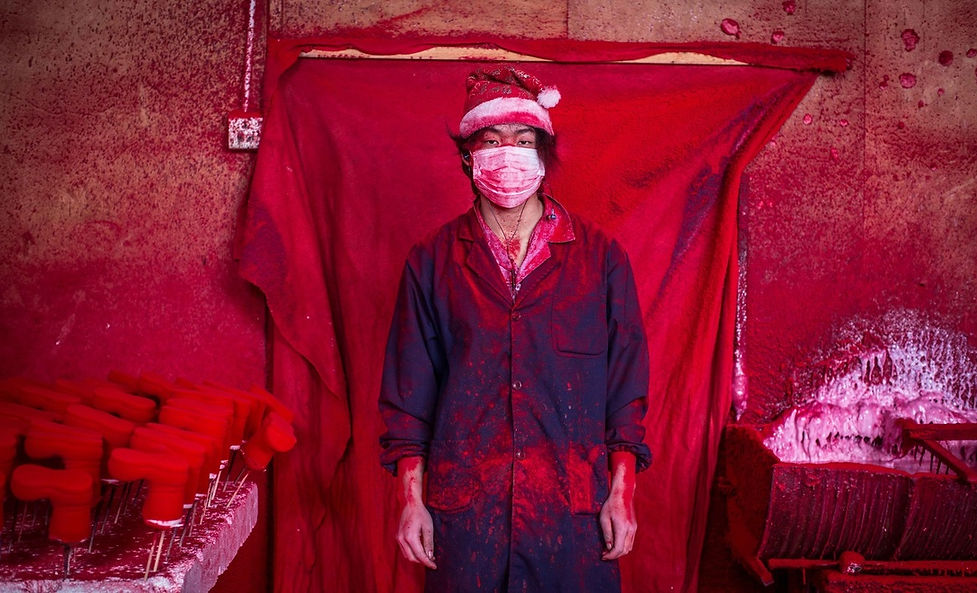
Alibaba Group
Alibaba Group Holding Limited is a Chinese multinational conglomerate holding company specializing in e-commerce, retail, Internet, and technology. Founded on 4 April 1999 in Hangzhou, Zhejiang, the company provides consumer-to-consumer (C2C), business-to-consumer (B2C), and business-to-business (B2B) sales services via web portals, as well as electronic payment services, shopping search engines and cloud computing services. It owns and operates a diverse array of businesses around the world in numerous sectors, and is named as one of the world's most admired companies by Fortune.
At closing time on the date of its initial public offering (IPO) – US$25 billion – the world's highest in history, 19 September 2014, Alibaba's market value was US$231 billion. As of 19 December 2018, Alibaba's market cap stood at US$352.28 billion. It is one of the top 10 most valuable and is #59 biggest public companies in the world by Global 2000 list. In January 2018, Alibaba became the second Asian company to break the US$500 billion valuation mark, after its competitor Tencent. As of 2018, Alibaba has the 9th highest global brand value.
Alibaba is the world's largest retailer and e-commerce company, one of the largest Internet and AI companies, one of the biggest venture capital firms, and one of the biggest investment corporations in the world. The company hosts the largest B2B (Alibaba.com), C2C (Taobao), and B2C (Tmall) marketplaces in the world. Its online sales and profits surpassed all US retailers (including Walmart, Amazon, and eBay) combined since 2015. It has been expanding into the media industry, with revenues rising by triple percentage points year on year. It also sets the record on the 2018 edition of China's Singles' Day, the world's biggest online and offline shopping day - Source