
clean meat


No poverty
no war
barter
#FridaysForFuture


happy animals
happy people
happy earth
clean environment
- mindful people
Environmental impact
The environmental costs of fast fashion
Fast fashion focuses on speed and low costs in order to deliver frequent new collections inspired by catwalk looks or celebrity styles. But it is particularly bad for the environment, as pressure to reduce cost and the time it takes to get a product from design to shop floor means that environmental corners are more likely to be cut. Criticisms of fast fashion include its negative environmental impact, water pollution, the use of toxic chemicals and increasing levels of textile waste.
Vibrant colours, prints and fabric finishes are appealing features of fashion garments, but many of these are achieved with toxic chemicals. Textile dyeing is the second largest polluter of clean water globally, after agriculture. Greenpeace’s Detox campaign has been instrumental in pressuring fashion brands to take action to remove toxic chemicals from their supply chains, after it tested a number of brands’ products and confirmed the presence of hazardous chemicals. Many of these are banned or strictly regulated in various countries because they are toxic, bio-accumulative (meaning the substance builds up in an organism faster than the organism can excrete or metabolise it), disruptive to hormones and carcinogenic.
Polyester is the most popular fabric used for fashion. But when polyester garments are washed in domestic washing machines, they shed microfibres that add to the increasing levels of plastic in our oceans. These microfibres are minute and can easily pass through sewage and wastewater treatment plants into our waterways, but because they do not biodegrade, they represent a serious threat to aquatic life. Small creatures such as plankton eat the microfibres, which then make their way up the food chain to fish and shellfish eaten by humans.
The devastating impact of toxic chemical use in agriculture, for growing cotton, was shown in a documentary called The True Cost, including the death of a US cotton farmer from a brain tumour, and serious birth defects in Indian cotton farmers’ children. Cotton growing requires high levels of water and pesticides to prevent crop failure, which can be problematic in developing countries that may lack sufficient investment and be at risk of drought.
Most cotton grown worldwide is genetically modified to be resistant to the bollworm pest, thereby improving yield and reducing pesticide use. But this can also lead to problems further down the line, such as the emergence of “superweeds” which are resistant to standard pesticides. They often need to be treated with more toxic pesticides that are harmful to livestock and humans - Source

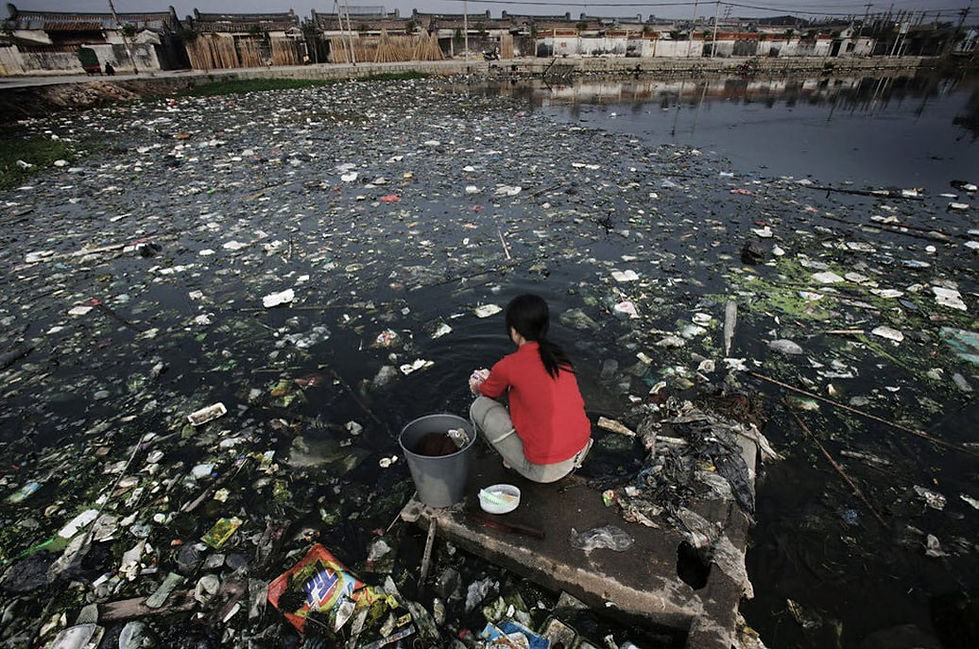
Water pollution, toxic chemical use and textile waste: fast fashion comes at a huge cost to the environment
Deadly Waters. Citarum: Indonesian river keeps textile industry’s dirty secrets - RTD travels to Indonesia, home to the Citarum considered the world’s most polluted river. It’s become a dumping site for chemical waste from hundreds of textile factories and local residents throwing sewage and domestic rubbish directly into the river. Despite the contamination, some 27 million people depend on the Citarum as their primary source of drinking water and irrigation. Find out more on how river degradation is affecting local lives and what environmentalists are doing to save their once pristine river.
India’s holy Ganges begins as a crystal clear river high in the icy Himalayas but pollution and excessive usage transforms it into toxic sludge on its journey through burgeoning cities, industrial hubs and past millions of devotees.
China
China will strive to generally restore the functions of its groundwater ecosystem with enhanced water quality by 2035 in an effort to curb water pollution. The target will be achieved gradually, with the share of the groundwater with extremely poor quality among total groundwater reduced to about 15 percent by 2020, according to an implementation plan released by the Ministry of Ecology and Environment and four other ministries.
The country will establish a system for standards and rules related to the protection and treatment of groundwater pollution and a national monitoring mechanism by 2025. A detailed plan will be released before the end of 2020 to outline key tasks and steps for groundwater pollution protection and treatment for the 2021-2025 period.
Pollution control is one of the country's three critical battles in China's bid to build a moderately prosperous society by 2020 - Source

Livestock and the environment
Growing populations, rising affluence and urbanization are translating into increased demand for livestock products, particularly in developing countries. Global demand is projected to increase by 70 percent to feed a population estimated to reach 9.6 billion by 2050.
Much of the growth in demand is being supplied through rapidly expanding modern forms of intensive livestock production, but traditional systems continue to exist in parallel.
Demand growth thus also presents opportunities for an estimated 1 billion poor that depend on livestock for food and income.
Whilst the sector provides high value food and many other economic and social functions, its resource use implications are large.
The livestock sector is the world’s largest user of agricultural land, through grazing and the use of feed crops.
It also plays a major role in climate change, management of land and water, and biodiversity.
The natural resources that sustain agriculture, such as land and water, are becoming scarcer and are increasingly threatened by degradation and climate change - Source
Cowspiracy: The Sustainability Secret - Animal agriculture is the leading cause of deforestation, water consumption and pollution, is responsible for more greenhouse gases than the transportation industry, and is a primary driver of rainforest destruction, species extinction, habitat loss, topsoil erosion, ocean “dead zones,” and virtually every other environmental ill. Yet it goes on, almost entirely unchallenged.
“What we do now echoes in eternity”